
First was the freshwater leak. Eight years ago, we had the tank sandblasted and then glassed and epoxied. It has behaved like new since then. On our trip through Canada, the tank sprung a leak – a small hole in one corner. We (with the wise council of Ben at LUBR) came up with an on-site engineering workaround involving three 55-gallon drums and rerouting the watermaker which is a fully functional repair. (There has been a separate blog on this issue – see “Water, water, everywhere.”). We tried to plug the hole from the outside using underwater cement and various plastic putty substances, but the pressure from the hundreds of gallons of water in the tank was too much, and nothing would hold long enough to staunch the flow. We drained the tank before diverting the plumbing.
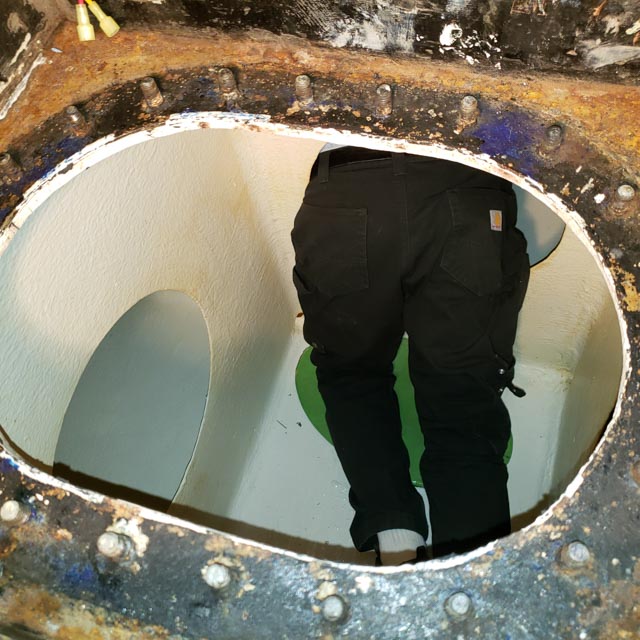
One enters the tank through a small hole which will fit the shoulders of a normal sized human (barely). The cover plate had not been removed for 9 years, and took several hours of brute force (and associated cursing), along with pry bars, heat guns, and other destruction implements before it released.
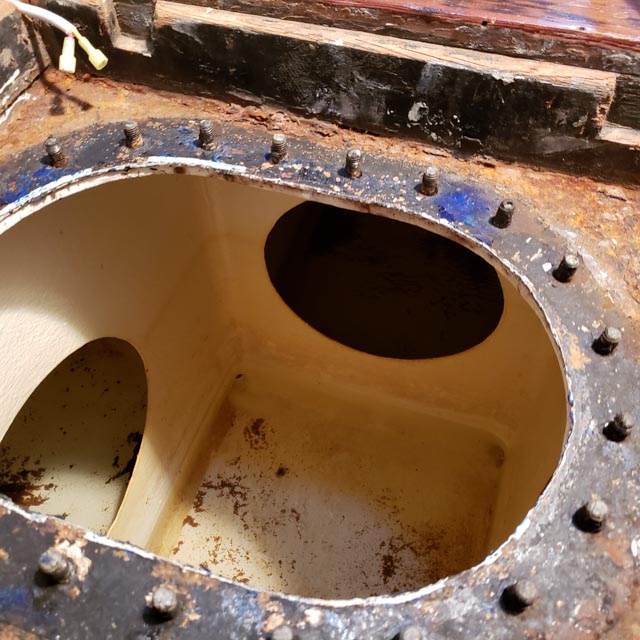
Water tank, cover removed
We drained the last little bit of water out of the tank and then sent in a volunteer (Nancy, since she is smaller and more likely to fit through the hole in the top of the tank) down to clean the sediment from the bottom of the tank [Note in editing: the last little water was actually removed by kayak pump and 5-gal buckets after Nancy was in the tank].
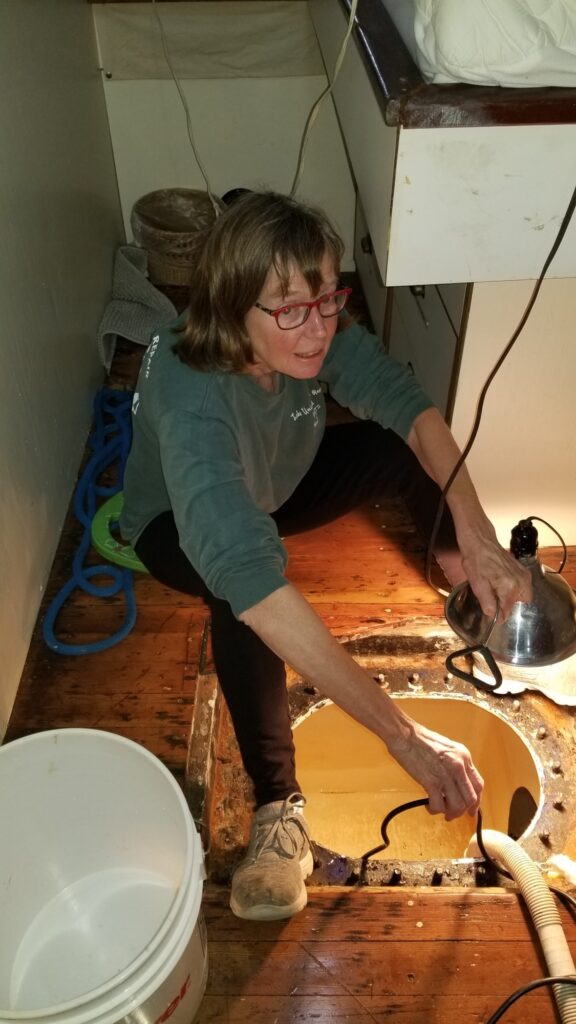
Nancy contemplating going below
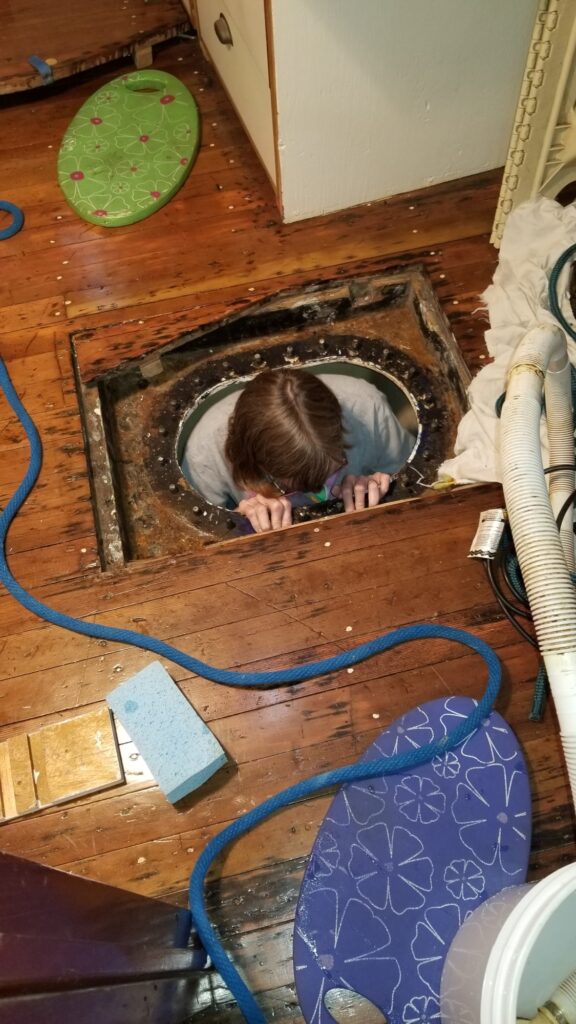
Nancy going below…
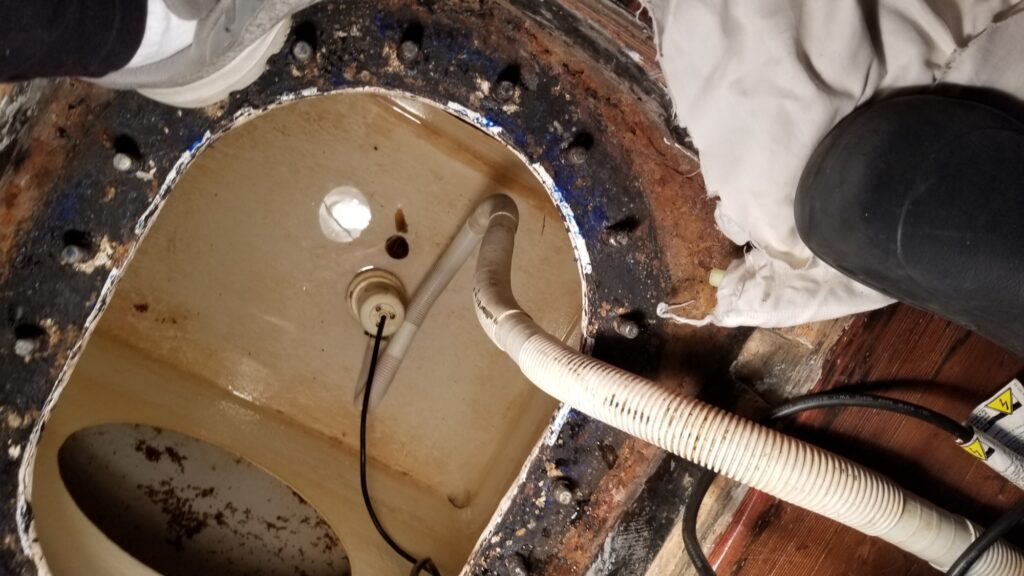
Using a spare bilge pump to remove some of the water
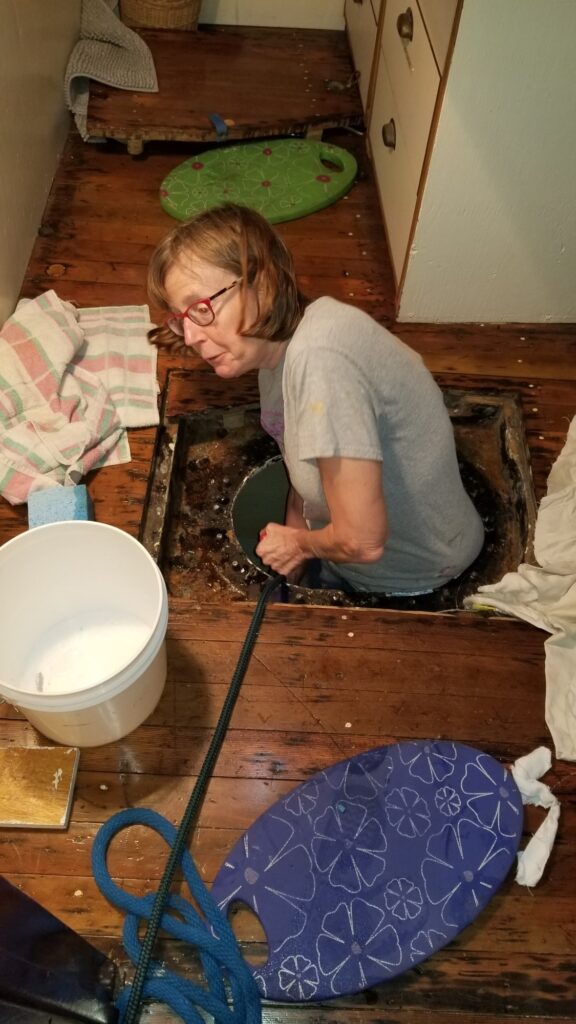
Removing the last of the water with 5 gal buckets, sponges, etc
The tank is divided into 8 compartments by solid baffles, with a round hole in the center. The baffles are to prevent water from sloshing around when moving. Here is a diagram that Nancy made.

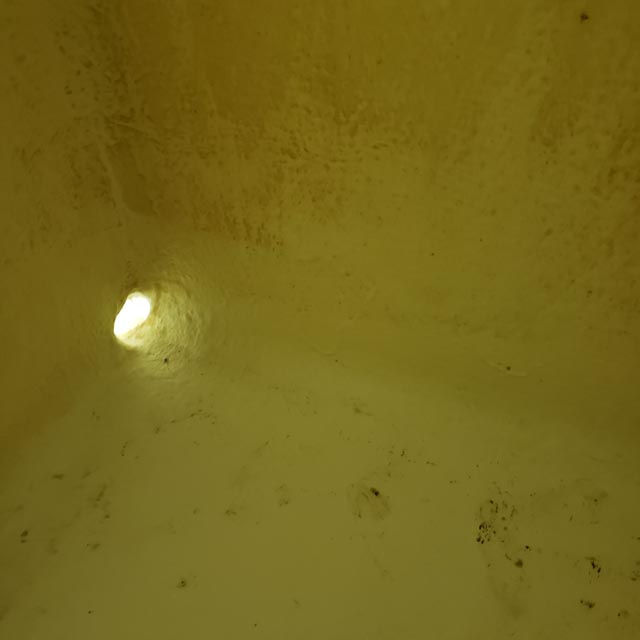
Communicating holes between chambers
Nancy was willing to go into the main chamber under the entry hole, and to stick her shoulders through a baffle, so that she could reach most of the tank sections, but decided she would not move her entire body into one of the adjacent chambers. This was an extremely claustrophobic situation. I watched her in the tank, and saw that she could turn completely around in the main chamber, and decided that if I could turn000000around as well, and if my shoulders fit through the baffle holes, then I would be able to access the corner where we thought the leak was coming from. I could get in the tank, turn around, and scoot into the adjacent chamber by going in feet first.
There is a new miracle product in our future – Splash Zone. It’s an epoxy that mixes to a putty-like consistency that can be used underwater, and which becomes as hard as a rock after curing. The manufacturer describes it as “duct tape for boats”. I went into the corner compartment and roughed up the surface epoxy around the cracks in the corner with an air tool paint remover wheel.
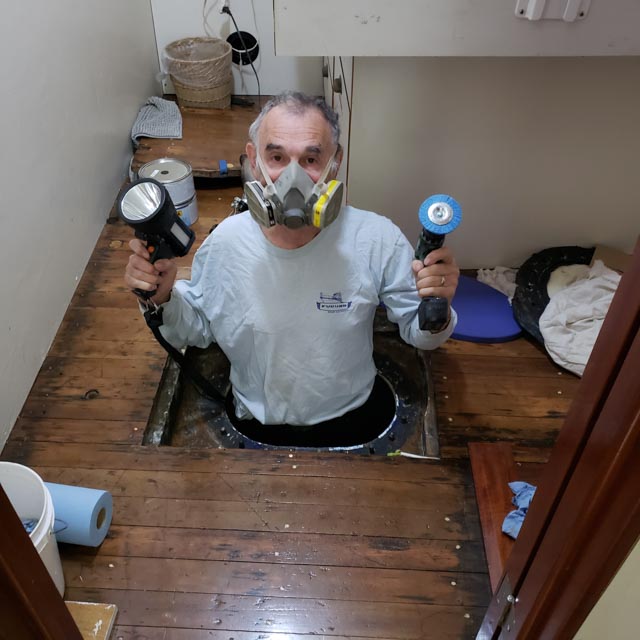
Peter preparing for repair
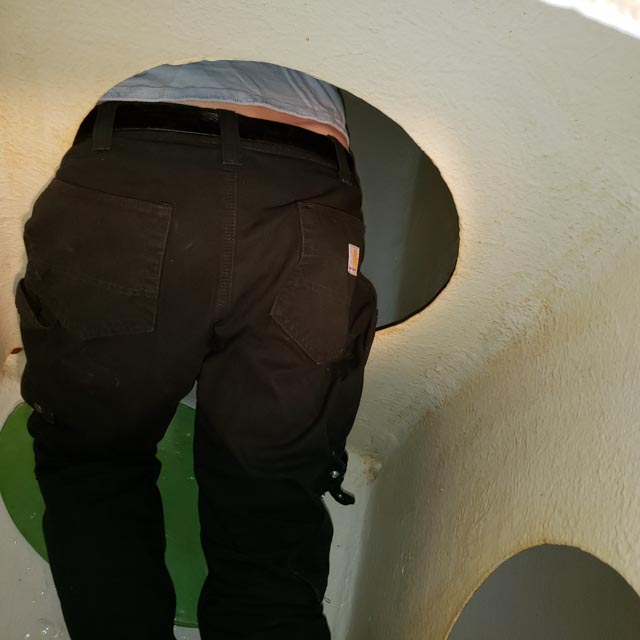
Peter starts to approach the leaking area
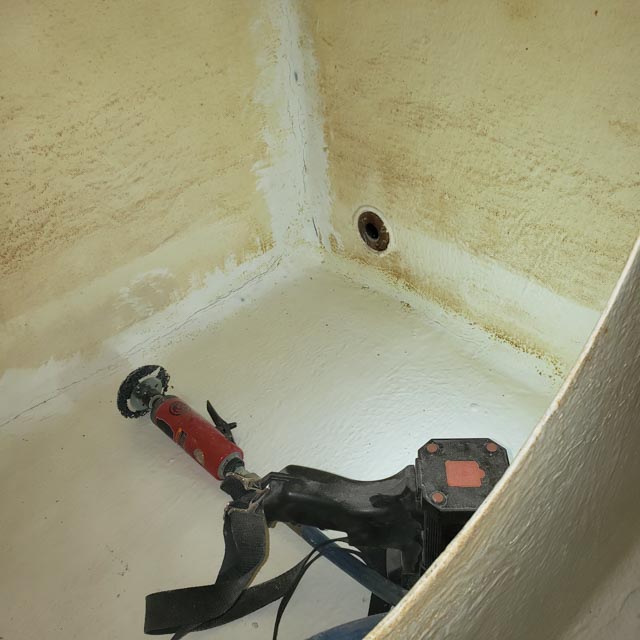
Prepped for repair
Nancy then mixed up the Splash Zone. It is an extremely gloppy material that forms a small ball when mixed.
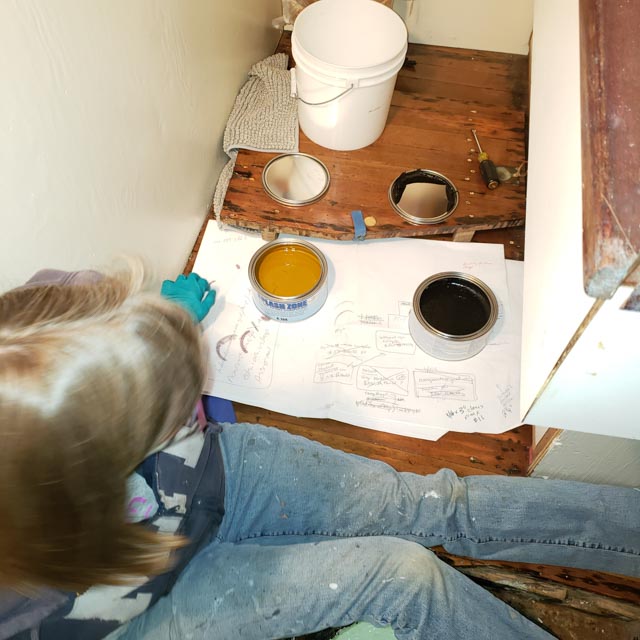
Splash zone prep area
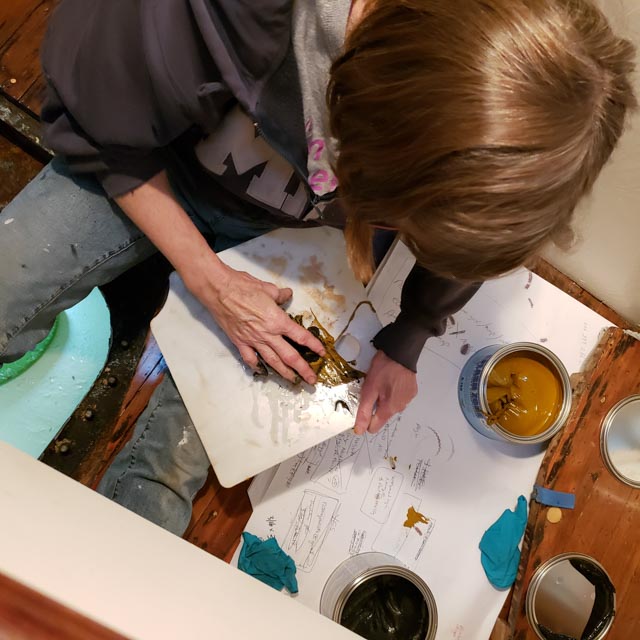
Mixing splashzone
I took the ball, and rolled it out into a ½ thick snake, and pressed the snake into the cracks that I could see in the leaking corner, both horizontally and vertically.
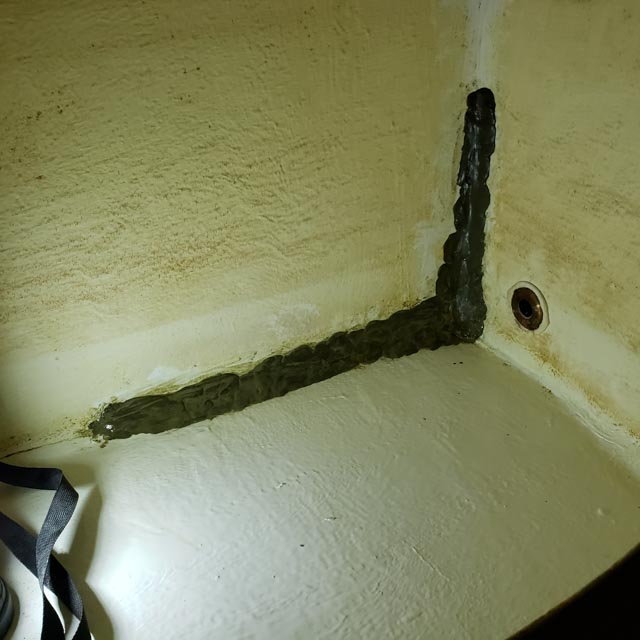
The repair
We let it cure overnight, reattached the watermaker hose to the tank, and then put several hundred gallons of water into the tank. The outside of the tank was DAAB (dry as a bone – our new catch phrase). Feeling somewhat optimistic, we drained out the water, a rinse to get the last of the sediment and whatever we added by mucking around in the tank. Then we put in around 600 gallons of fresh water. By opening a hatch, we could see down into the bilge where the original leak had been, so we checked the area of leakage every time we went down to the forward cabins. It was always DAAB. It is now three days since we plugged the cracks, the tank is full, and remains DAAB. We believe we have fixed this problem permanently. Or at least as permanently as anything can be on an old boat.